MicroSD Storage: The Ideal Primary Storage for Modern Surveillance Solutions
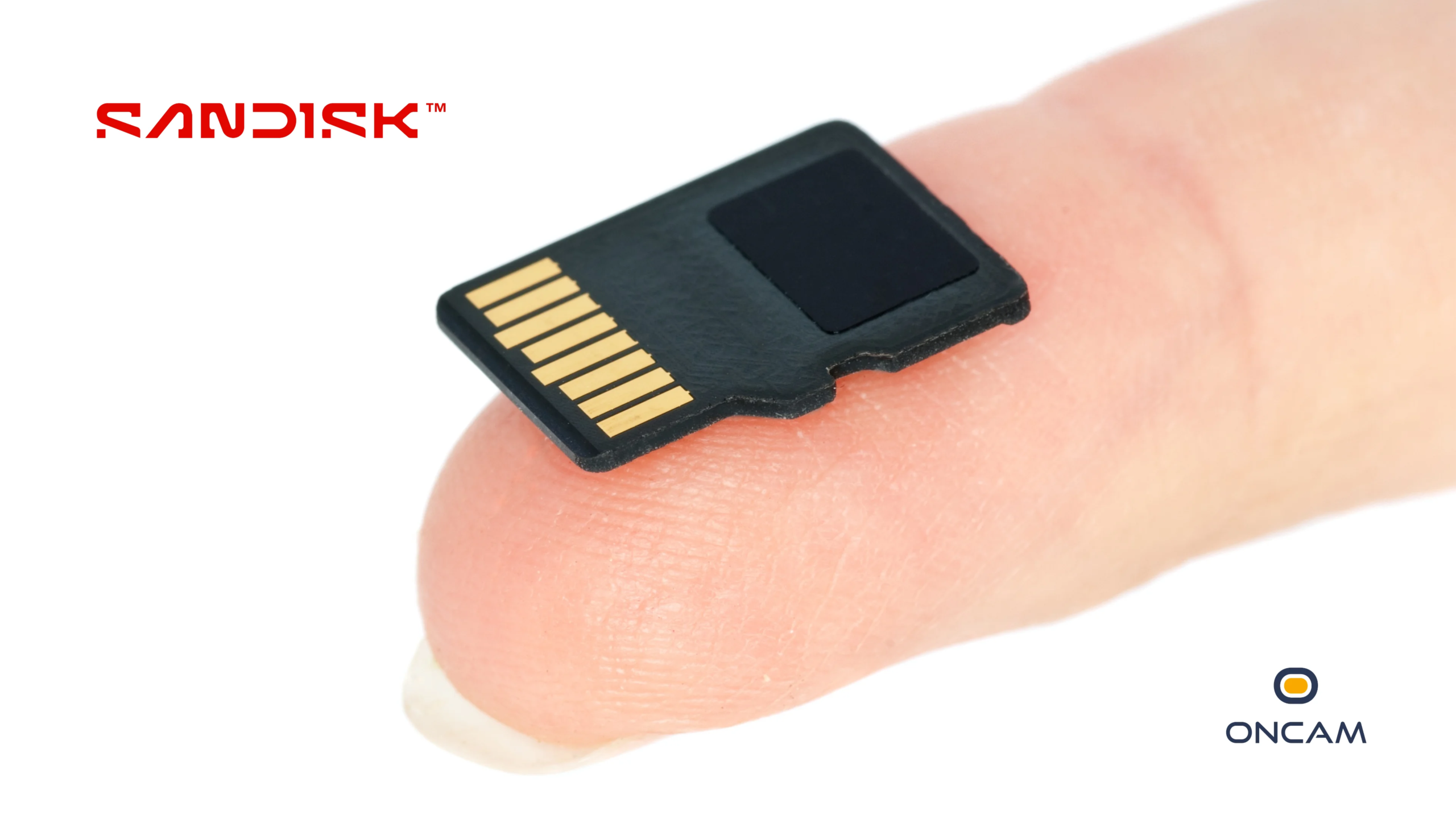
There’s a long-standing perception that Solid-State Drives (SSDs) or even magnetic hard drives are inherently more reliable than microSD™ cards for surveillance applications. While SSDs and HDDs have their strengths, when it comes to in-camera storage, modern microSD cards — combined with a well-designed camera platform — can provide reliability, performance, and flexibility for your requirements. (For simplicity, we’ll refer to Solid-State Drives as SSDs throughout this article.)
In solutions such as Oncam’s next-generation architecture, microSD cards serve as the primary storage, delivering exceptional performance and reliability without the need for traditional NVRs, central servers, or extensive internet bandwidth. The result is a simplified, maintenance-friendly system that is both highly resilient and cost-effective.
Storage Technology Fundamentals
microSD cards and SSDs share similar underlying memory technologies — typically TLC 3D-NAND — along with controllers and firmware optimized for their intended workloads. SSDs are designed for high-speed, random access patterns in laptops, servers, and data centers. microSD cards, on the other hand, are optimized for sequential write-heavy workloads, which makes them ideal for video capture.
The main differences come from how those components are optimized for their intended workloads. Oncam’s partnership with Sandisk is a prime example of this done perfectly: the cameras are paired with SANDISK® Video microSD cards, engineered and validated specifically for the sustained throughput and endurance required by modern surveillance, including advanced AI video analytics.
Form Factor, Performance, and Flexibility
One of the main advantages of microSD cards is their compact size and removable form factor. This makes it easy for integrators to adapt to changing customer requirements — whether increasing video retention time, increasing video quality settings, using higher frame rates, or adding additional cards for features like extended storage, cross-camera backup, or card mirroring — without replacing the camera hardware itself
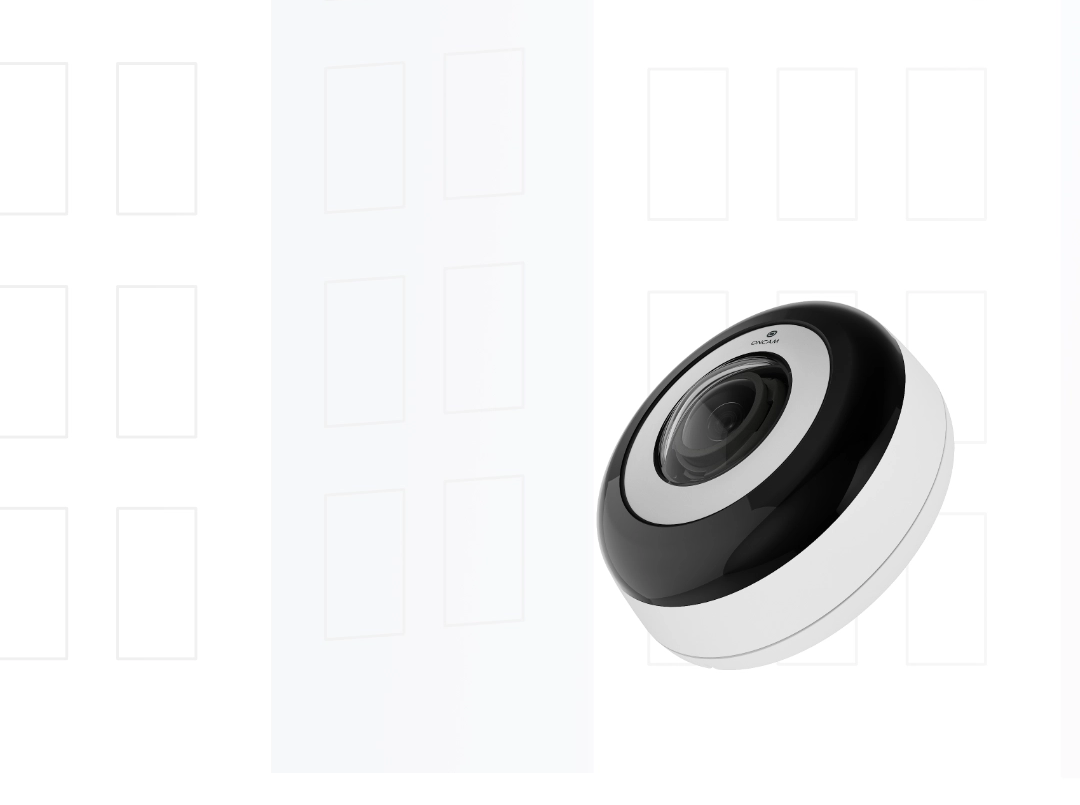
Beyond flexibility, microSD cards provide ample write performance even for the highest demands of modern video applications, as an example, comfortably capturing multiple streams on the Oncam C-16 Fisheye camera, a cutting-edge camera whose advanced imaging requires high-throughput, reliable storage.
In comparison, SSDs come in larger form factors such as 2.5” drives, M.2, U.2, or E1.s, designed primarily for laptops, servers, or data centers. SSDs provide higher interface speeds and larger capacity points — often exceeding 60TB — but they are less convenient to integrate directly into compact cameras.
Cost considerations also differ. SSDs typically cost more per terabyte due to higher-performance controllers and design requirements. microSD cards, optimized for video workloads, deliver sustained write performance at a lower total system cost and with greater ease of integration into camera platforms.
Primary Storage and System Reliability
In Oncam’s solutions, each camera records to the primary microSD card, while the second card slot supports extended storage, cross-camera backup, or card mirroring. This distributed architecture helps eliminate single points of failure common in NVR-based systems, while maintaining extremely high reliability and data integrity.
By pairing Oncam cameras with SANDISK Video microSD cards, the system achieves performance and endurance that rivals — and in some ways surpasses — traditional NVR-based solutions. This allows integrators to deploy a maintenance-friendly, plug-and-play solution with confidence, without compromising on storage reliability, video retention, or AI-powered capabilities.
Choosing the Right Card
Not all microSD cards are created equal. Some use lower-grade memory with limited endurance or operate poorly across wide temperature ranges, which can lead to lost frames in video applications. SANDISK Video microSD cards are engineered for video-specific workloads, offering numerous program-erase cycles and features that enable monitoring of card health, helping prevent unplanned downtime and reducing total cost of ownership.
Conclusion
MicroSD cards, when integrated correctly into a camera platform like Oncam’s, provide a robust, high-performance primary storage solution. They combine flexibility, compactness, and endurance to meet even the most demanding surveillance applications, from continuous high-resolution video capture to multi-stream AI-enabled analysis.
With Oncam and Sandisk working together, integrators can confidently deploy a reliable, scalable, and maintenance-friendly surveillance solution that helps remove dependency on NVRs or central servers while supporting cutting-edge cameras. In other words, SD cards aren’t just “enough” — when engineered and deployed correctly, they can form the backbone of a modern, enterprise-grade surveillance solution.

The Future of Video Surveillance Reimagined
Oncam builds intelligent video solutions that help organizations see clearly, act quickly, and scale confidently. With engineering and product teams in the UK and US, Oncam designs hardware, software, and cloud technologies focused on simplicity, openness, and long-term reliability for modern enterprises and their channel partners.
For more details visit: Oncam.net
© 2026 Oncam. All rights reserved.