What Makes a Video Surveillance Platform Truly Mobile-First?
Mobile access has shifted from a convenience to a core operational requirement in video surveillance—but many platforms still treat it as an add-on rather than a primary interface.
As security operations become more distributed—spanning multiple sites and roles—the ability to monitor and respond away from a control room is increasingly critical.
Yet not all mobile experiences are created equal.
Many platforms offer mobile apps; but these are often limited extensions of desktop systems, designed for occasional viewing rather than day-to-day operational use. The result is a fragmented experience, where critical tasks still require a return to a workstation.
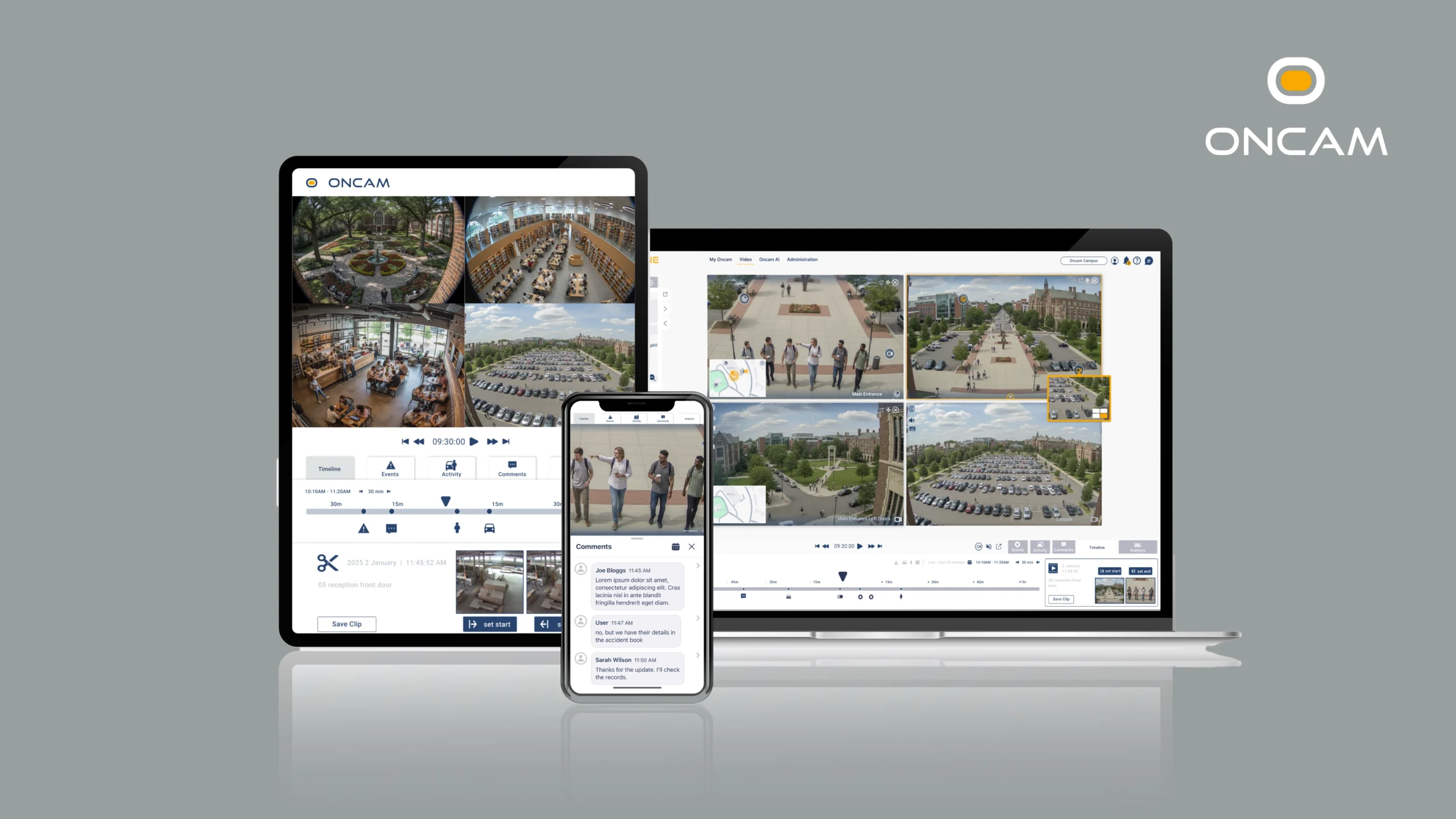
A truly mobile-first platform takes a different approach. It treats the smartphone as a primary interface, not a secondary one—and designs the system accordingly.
What Sets a Mobile-first System Apart?
First, access to video must be immediate and intuitive. Users should be able to move between cameras, locations, and timelines without navigating complex menus or relying on prior system knowledge. In time-sensitive situations, simplicity and accessibility directly impact response speed.
Second, mobile functionality needs to go beyond passive viewing. Investigation workflows—assessing alerts, monitoring live camera feeds, searching recorded footage—should be fully supported on mobile devices. If key steps still require a desktop, the workflow remains incomplete.
Third, real-time awareness is critical. Notifications, alerts, and live updates need to be delivered in a way that is both timely and actionable so teams can respond without delay.
Finally, performance and reliability matter. Mobile access should not be dependent on cumbersome configurations or inconsistent connectivity. A well-designed system accounts for varying network conditions and ensures a consistent experience across environments.
As security operations continue to evolve, the ability both to access and act on video from anywhere is becoming central to effectiveness. In that context, “mobile access” is no longer enough. The focus is shifting toward platforms designed for mobile from the ground up—where monitoring, investigation, and response can all happen wherever the user is.