
How Edge AI Is Changing the Economics of Video Surveillance
For years, the economics of video surveillance have been measured largely by the cost of cameras, recorders and installation. But as organizations deploy more cameras across more locations, the ongoing costs of moving, storing, processing and reviewing video are becoming just as important as the initial investment.
Edge AI is changing that equation by moving intelligence closer to where video is captured. Rather than treating edge and cloud as competing approaches, modern video architectures can use each where it makes the most sense—processing and optimizing video closer to the camera while using cloud systems for centralized management, access, storage and analytics.
The result is a more efficient approach to video surveillance, one that can improve both system performance and ROI.
The Economics of Video Go Beyond Camera Count
Adding cameras can increase visibility, but it also increases the amount of data a surveillance system must manage. Every additional camera contributes to network traffic, storage requirements, processing demands and the workload associated with monitoring and investigation.
That makes total cost of ownership (TCO) a more useful way to evaluate a video surveillance system than the cost of individual devices alone. TCO includes not only cameras and infrastructure, but also bandwidth, storage, maintenance, system administration and the employee time required to monitor and investigate video.
Bandwidth and storage are particularly important considerations for organizations with multiple sites or large deployments. Continuously transmitting and retaining high-resolution video can place significant demands on network infrastructure and storage capacity. On top of this, when security teams need to investigate an incident, reviewing hours of irrelevant footage consumes another valuable resource: employee time. Edge AI offers a way to address several of these costs at once by allowing organizations to process information closer to the source and reduce unnecessary movement of video across the network.
Moving Intelligence Closer to the Camera
Traditional video surveillance architectures often send captured video to a centralized server, NVR or cloud environment for processing and analysis. Edge AI, on the other hand, moves much of that intelligence closer to the source.
Instead of treating every frame of video equally, an edge-enabled system can analyze video locally and identify relevant events, objects or activity. That information can then be used to trigger alerts, generate metadata or determine what video needs additional processing or attention.
This doesn’t mean organizations need less visibility. It means they can be more selective about how their infrastructure handles the enormous volume of information generated by modern video systems. For organizations managing distributed or bandwidth-constrained environments, that distinction can have a meaningful economic impact.
Reducing Bandwidth and Storage Demands
One of the clearest benefits of intelligent video processing is greater efficiency in moving and storing video data. Edge AI is one part of a broader approach to video data efficiency; however, technologies that optimize video streams and frame rates can further reduce the bandwidth and storage required to operate a surveillance system.
Oncam’s StreamLite technology, for example, is designed to reduce bandwidth and storage requirements while maintaining useful video quality. On average, StreamLite helps organizations cut more than 50% of their storage costs, while Dynamic FPS is capable of reducing bandwidth and storage by more than 90% in scenes without motion.
These efficiencies become increasingly significant as deployments scale. A reduction in data requirements at one camera can be multiplied across dozens, if not hundreds or thousands of cameras, potentially reducing the infrastructure needed to support the system.
Edge intelligence can complement this approach by helping organizations prioritize the data that matters most. Rather than building an architecture around the assumption that every piece of video requires the same level of processing and retention, organizations can design systems around the information they actually need.
Lower Infrastructure Costs Are Only Part of the Equation
The financial benefits of edge AI aren’t limited to hardware and bandwidth, either. Video surveillance also carries a human cost. Security teams may spend significant amounts of time searching footage to understand what happened before, during and after an incident. As camera deployments grow, so does the amount of footage available for review.
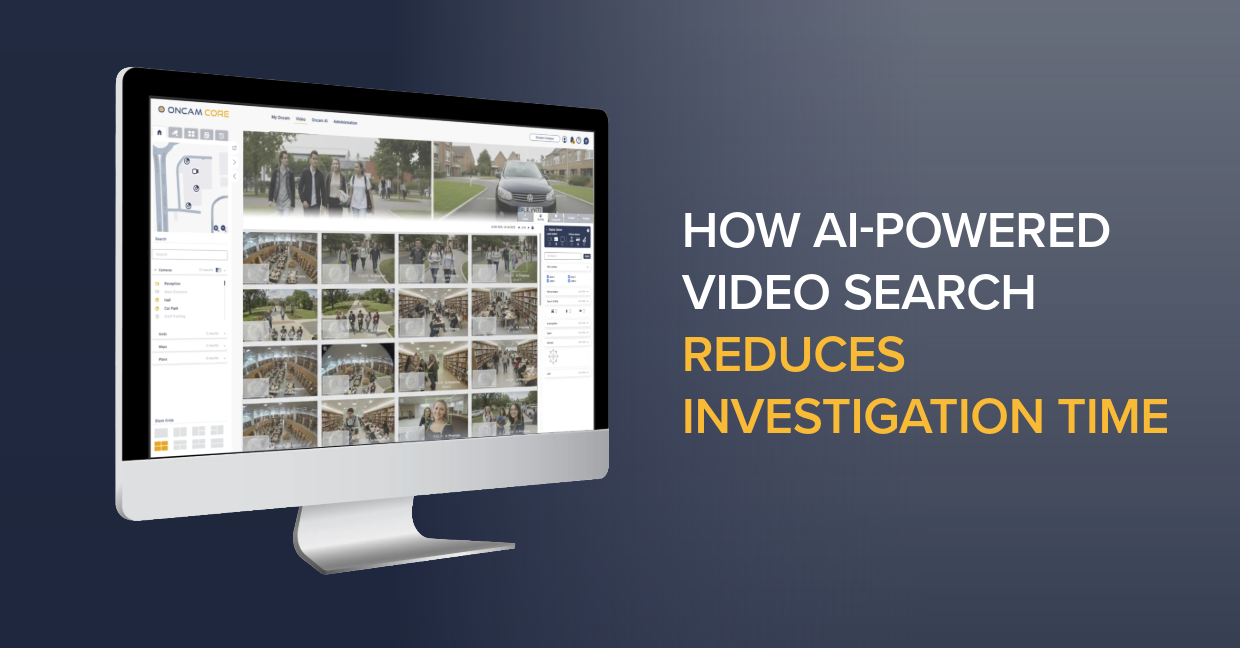
AI-powered video analytics and search can help reduce that burden by making video easier to navigate and investigate. Instead of manually scanning footage across multiple cameras and time periods, operators can use intelligent tools to identify relevant events or objects more efficiently. Oncam Core, for example, uses AI-powered capabilities such as AI Attribute Tags and Smart Search to help users find relevant video faster.
This is where the economics of video surveillance begin to shift from infrastructure efficiency to operational efficiency. A system that costs less to store but still requires hours of manual investigation isn’t necessarily delivering the best possible return. The more valuable question is how effectively the entire video infrastructure helps people make decisions.
Edge AI and the Rise of Hybrid Video Architectures
Edge processing is also well suited to today’s increasingly distributed security environments. For organizations that have cameras deployed across corporate offices, retail locations, campuses, hospitality properties, transportation facilities and other remote sites, those locations don’t necessarily have identical network capacity, IT resources or operational requirements.
Processing intelligence at the edge reduces reliance on moving large volumes of video across the network. Meanwhile, combining edge AI with cloud and centralized systems offers security teams broader management, accessibility and analysis capabilities.
To be clear, this isn’t an argument for choosing edge over cloud. In many environments, the most practical architecture combines both. While edge intelligence can handle time-sensitive processing and data reduction close to the camera, cloud-based systems can provide centralized visibility and management. That flexibility is particularly important as organizations modernize existing surveillance infrastructure rather than replacing everything at once.
What Edge AI Means for Security Integrators
For security integrators, the economics of a video surveillance architecture extend beyond the initial equipment sale. Edge and cloud capabilities can influence network requirements, infrastructure, deployment complexity, scalability, maintenance and ongoing customer services.
A more flexible architecture can also create opportunities for integrators to help customers optimize existing investments rather than replacing an entire surveillance environment at once.
A New Way to Measure Video Surveillance ROI
As video surveillance becomes more intelligent, organizations should expand the way they measure its value. The relevant calculation isn’t simply the cost of cameras versus the number of cameras deployed. It includes bandwidth, storage, infrastructure, maintenance, monitoring and the time required to investigate events. It also includes the value of faster detection, better situational awareness and more efficient decision-making.
Edge AI can help optimize that entire equation. For organizations evaluating their next video surveillance investment, the question is no longer simply how much video a system can capture. It’s how efficiently that system can turn video into useful information.
That shift—from capturing more data to intelligently processing the right data—is helping redefine the economics of modern video surveillance.
Ready to rethink the economics of your video surveillance infrastructure? Book a demo to see how Oncam combines edge and cloud AI, intelligent video management and flexible video technologies to help organizations build a more efficient, scalable surveillance environment.