Connecting the Dots: The Power of Cross-Camera Tracking
Security teams rarely investigate an incident using footage from a single camera. In many cases, a suspect enters through one door, moves through a lobby and disappears into a parking area—passing through multiple spaces and by multiple cameras before and after an incident occurs. An operator may know roughly what happened, but understanding the complete sequence of events can require searching through hours of footage across multiple cameras.
As surveillance systems grow across larger facilities and distributed sites, that process becomes more difficult to manage manually. That’s where cross-camera tracking can make a difference. It allows an operator to find a person or vehicle in one camera view and identify related appearances across other cameras, helping reconstruct their movement through a site.
Supported by AI-powered video search and intelligent video management software, cross-camera tracking can help security teams reduce the time it takes to find relevant footage and build a clearer picture of an incident.
Moving Beyond Camera-by-Camera Searches
Traditional video investigations often require operators to work sequentially. They identify a starting point, review footage, note a person or vehicle’s direction of travel, then move to another camera and repeat the process. This approach works, but it is time consuming and depends heavily on the operator’s ability to identify where to look next. At multi-site facilities with hundreds if not thousands of cameras, these challenges only compound.
AI-powered video search changes the process by allowing operators to search footage based on relevant characteristics and events rather than relying solely on timestamps and camera locations. Instead of manually reviewing every recording, an operator can narrow the search to footage that is more likely to contain the person, vehicle or activity in question.
Cross-camera tracking extends that capability across the surveillance environment. Instead of treating each camera as an isolated source of information,it can help operators follow a person or vehicle across multiple views and connect relevant footage into a more complete sequence of events. This creates a more connected approach to investigation that can help security teams spend less time locating footage and more time understanding what happened.
Turning More Video Into More Useful Information
The value of cross-camera tracking isn’t simply that it makes video easier to find. It can change how security teams use the information their cameras are already collecting. Consider an incident in a large commercial facility. A security operator may know that an individual entered through a particular entrance but have limited information about where that person went afterward. With conventional workflows, the operator might need to search several cameras manually, checking timestamps and reviewing footage until they find the next relevant view.
AI-powered video search can help narrow that process by identifying footage that matches relevant characteristics. Cross-camera capabilities can then help connect those findings across the wider camera network. This can be particularly valuable in environments where cameras cover interconnected spaces, including campuses, commercial properties, transportation facilities, hospitality environments and other large sites. The result isn’t necessarily more video but more usable information from the video already being captured.
Faster Investigations Without More Infrastructure
As organizations expand their surveillance systems, adding cameras can increase visibility—but it can also increase the volume of footage that security teams need to manage. That creates a practical challenge: How can organizations gain greater visibility without creating an equally significant increase in investigative workload?
Intelligent video management software provides one answer by adding intelligence at the software level. AI can help categorize video, identify relevant events and make footage easier to search, while cloud-connected architecture can make that information accessible across locations and devices.
This is where a modern video management platform can complement existing surveillance infrastructure. Rather than requiring security teams to replace every camera or redesign an entire deployment, software can provide new ways to interact with the video those systems already produce.
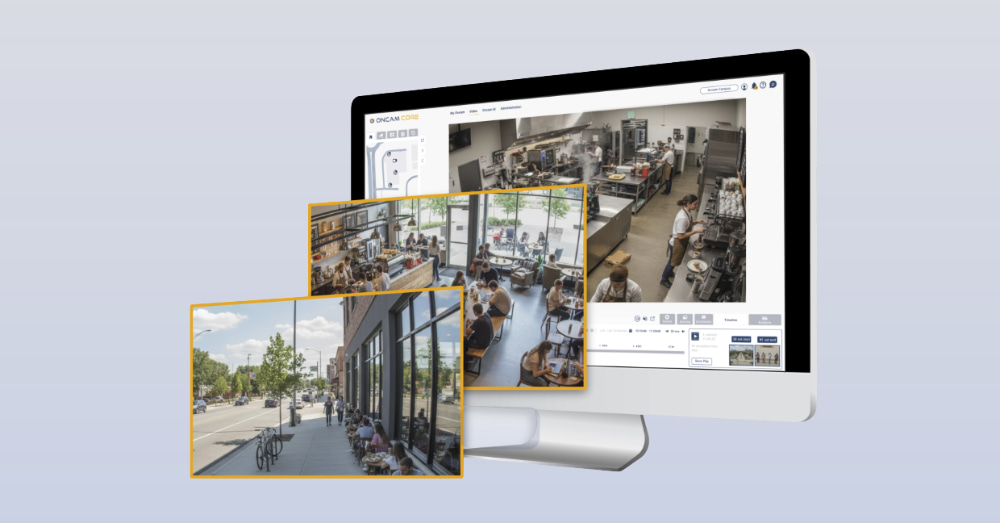
Oncam Core brings these capabilities together in a single platform. It combines AI-powered video search with intuitive video and camera control, giving operators a more streamlined way to find and investigate relevant footage. Its mobile-first approach also allows authorized users to access video and camera controls across browsers and mobile devices, supporting investigation workflows beyond a traditional workstation.
From Finding Footage to Understanding Events
Cross-camera tracking is ultimately part of a broader shift in video surveillance. Across industries, security professionals are moving away from systems that primarily record events and toward systems that help organizations understand them.
That doesn’t mean removing the operator from the investigation. Human judgment remains critical, particularly when determining what an event means and what action should follow. The role of AI is to reduce the manual work required to get to that point. By making video searchable, connecting information across cameras and surfacing relevant footage more quickly, AI-powered video management can help security teams investigate with greater efficiency.
As surveillance environments continue to grow, that distinction will become all the more important. The goal is to make the video organizations already record effortlessly searchable, easier to understand and more useful when it matters.