Designing Resilient Surveillance Systems Without Adding Complexity
When a security incident occurs, the greatest risk isn’t always that a camera fails. It’s discovering that the footage needed for an investigation is unavailable due to a storage failure, network disruption, or system outage. As surveillance environments become more distributed, ensuring video remains accessible has become just as important as capturing it in the first place.
A resilient video surveillance system needs to do more than keep cameras running. Security teams also need confidence that video will remain available when equipment fails, networks are disrupted or an incident requires access to footage from multiple locations.
Traditionally, organizations have addressed these risks by expanding their infrastructure, adding more servers, storage and network components, as well as expanding their backup strategies. But resilience does not have to mean complexity. Modern video management platforms are creating new ways to build redundancy and protect critical footage while reducing the infrastructure and maintenance burden placed on security teams.
Resilience Starts With Protecting the Video
A surveillance camera can only be useful during an incident if the footage it captured remains available. That might sound straightforward, but video systems operate across a collection of cameras, networks, storage devices and software. A failure at any point can affect access to recorded video.
Organizations need to consider resilience at more than the camera level. Where is video stored? What happens if a camera goes offline? How quickly can operators access recordings? And how much additional infrastructure is required to maintain availability? These questions become even more important as organizations expand across multiple facilities.
Beyond the technical consequences, unavailable video can disrupt investigations, delay incident response and create operational and compliance risks. For organizations managing multiple sites, even a brief interruption in access to critical footage can have significant consequences.
While traditional approaches involve centralized recording infrastructure or additional dedicated storage, a more flexible approach distributes some of that resilience closer to the cameras themselves.
Building Redundancy Into the Surveillance Environment
One example is cross-camera backup. With the right software architecture, cameras on the same network can help protect one another’s recordings. If a primary camera becomes unavailable, another camera can temporarily retain the relevant recordings, helping preserve video without requiring every camera to have a separate dedicated backup system.
This approach changes the question from “How much backup infrastructure do we need?” to “How can the infrastructure we already have contribute to system resilience?” That distinction matters at scale.
For organizations managing dozens or hundreds of cameras, resilience strategies that require significant additional hardware can become difficult to deploy consistently. They can also increase maintenance requirements and create additional points of failure. Software-enabled redundancy can provide another layer of protection while making better use of existing resources.
Unlocking the Cloud Without Rebuilding the System
Cloud connectivity can add another layer of resilience by giving organizations a way to archive and access video beyond the physical infrastructure at a particular site. If local infrastructure is disrupted or unavailable, cloud-based archiving can provide another path to important footage. The cloud can be particularly useful for organizations with distributed locations. Instead of managing storage independently at every facility, security teams can use centralized cloud-based capabilities to support video retention and access across locations.
That doesn’t mean every organization needs to abandon local infrastructure. In many environments, a hybrid approach makes more practical sense. Local recording can support immediate access and continuity, while cloud archiving provides additional storage, accessibility and protection for important footage.
The objective is flexibility—giving security teams multiple ways to protect and access video without forcing every deployment into the same architecture.
Simplifying Management Across Distributed Sites
Resilience also has an operational dimension. While traditional surveillance architecture includes redundant storage and backup capabilities, many of these systems are still difficult to manage. If administrators need to configure, monitor and troubleshoot each location independently, the complexity of the overall system can grow quickly.
Centralized video management can help address this challenge by giving authorized users a consistent way to manage cameras, access video and respond to events across distributed environments. Cloud-connected platforms in particular can make this particularly practical for organizations with multiple facilities. Rather than requiring security teams to maintain a separate management workflow for every site, a centralized platform can provide a common interface for video access and system management.
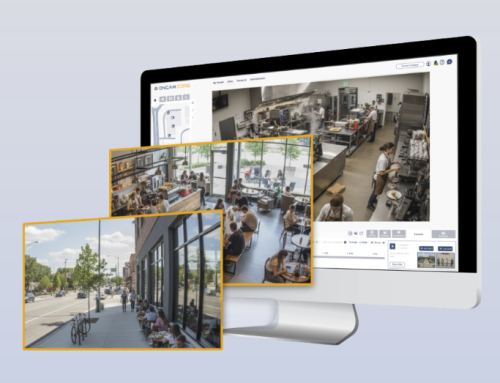
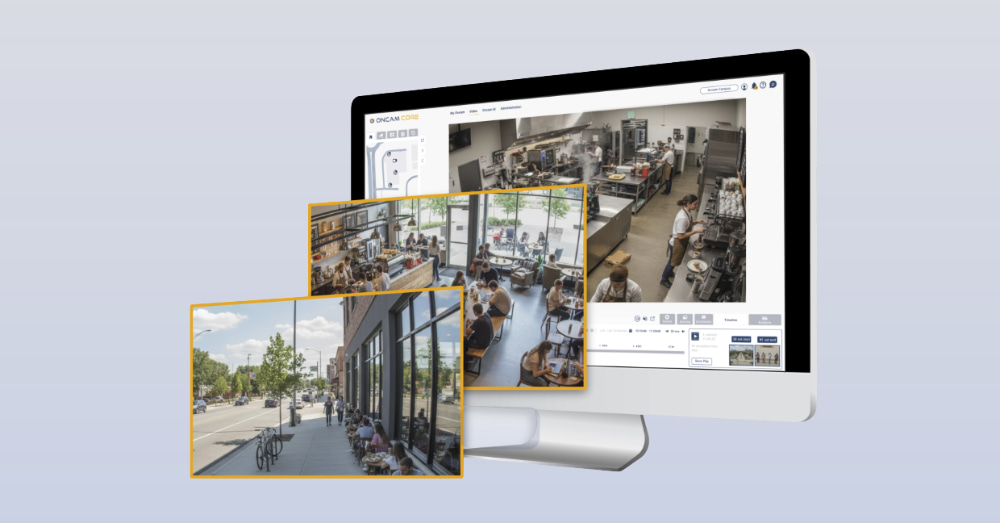
Oncam Core is designed around this approach, combining cloud connectivity, centralized management, cloud archiving and Cross-Camera Backup within an enterprise-grade video management platform. The result is a surveillance architecture designed to add resilience without requiring unnecessary infrastructure at every location.
Designing for Failure Without Designing for Complexity
No surveillance system can eliminate every potential point of failure. The more useful objective is to design for what happens when something inevitably goes wrong. That means considering redundancy, storage, connectivity and management together rather than treating each as a separate problem.
For security leaders, the most resilient architecture may not be the one with the most hardware. It may be the one that provides multiple paths to protect and access critical video while remaining practical for security teams to operate over time.
As organizations expand their surveillance environments, that balance becomes increasingly important. Resilience should strengthen the system—not create another system for the security team to manage. By combining distributed capabilities, cloud connectivity and intelligent video management, organizations can build surveillance environments that are better prepared for disruption while remaining simpler to operate, scale and maintain.