
How Edge AI Is Changing the Economics of Video Surveillance
For years, the economics of video surveillance have been measured largely by the cost of cameras, recorders and installation. But as organizations deploy more cameras across more locations, the ongoing costs of moving, storing, processing and reviewing video are becoming just as important as the initial investment. Edge AI is changing that equation by moving intelligence closer to where video is captured. Rather than treating edge and cloud as competing approaches, modern video architectures can use each where it makes the most sense—processing and optimizing video closer to the camera while using cloud systems for centralized management, access, storage and [...]

Beyond Security: How Video Analytics Improve Business Operations
For most security professionals, video surveillance is most commonly associated with monitoring facilities, deterring unwanted activity and providing evidence when an incident occurs. However, modern video systems can do much more than document what happened. Now that video analytics and artificial intelligence are a part of the equation, the same devices traditionally used for surveillance can also provide insights into how people move through a space, how facilities are being used and where operational bottlenecks may be developing. This turns video footage into more than just a record of past events but also a source of operational intelligence that can [...]

Direct-to-Cloud Surveillance: What Integrators Need to Know Before Deployment
Today, many security leaders are asked to perform a delicate balancing act of expanding the capabilities of their video deployments while reducing the complexity of on-site infrastructure. While this may sound unrealistic, direct-to-cloud surveillance has emerged as an approach that can help organizations achieve these goals, by allowing video data to be securely transmitted to the cloud without relying on traditional on-premises recording hardware. For systems integrators, moving to a direct-to-cloud architecture involves more than selecting compatible cameras. Successful deployments require careful planning around network performance, cybersecurity, storage strategies, and customer expectations. Understanding these considerations early can help integrators deliver [...]

Why Open Platforms Matter in Modern Video Security Ecosystems
Video security environments rarely operate in isolation. Today’s organizations rely on a growing ecosystem of cameras, access control systems, analytics platforms, sensors, and business applications that all contribute valuable operational data. As these environments become more connected, the ability to integrate technologies effectively is becoming increasingly important. Many security technology vendors describe their platforms as “open,” but openness can mean different things in practice. For organizations evaluating video security platforms, understanding what meaningful interoperability looks like can be just as important as the number of integrations a vendor offers. The Challenge: Connected Technologies, Disconnected Systems Many organizations have built their [...]

Hybrid Video Surveillance Architecture: Why Flexibility Is Shaping the Future of Enterprise Video Surveillance
Oncam COO Scott Brothers joined the SecurityDNA podcast to discuss cloud adoption, hybrid architecture, AI-powered analytics, interoperability, and the future of enterprise video surveillance. Key takeaways: Hybrid video surveillance architecture — combining edge processing, local storage, and cloud services — is becoming the enterprise standard because it balances performance, cost, and resilience better than pure cloud or pure on-prem. AI video analytics delivers real operational value, but total cost of ownership (compute, storage, network) needs to be evaluated alongside features, not after deployment. Interoperability and open platforms are now top evaluation criteria, since security leaders want confidence their investment scales [...]
How AI-Powered Video Search Reduces Investigation Time
When a security incident occurs, finding the right footage can be one of the most time-consuming parts of the investigation. Security teams often need to review recordings from multiple cameras, estimate timelines, and manually search through hours of video to locate relevant events. As video deployments continue to grow, this process becomes increasingly difficult. More cameras, longer retention periods, and larger facilities mean investigators must sift through more data than ever before. The Challenge: Finding Critical Evidence Quickly In many organizations, investigators are asked to respond quickly to incidents while managing large volumes of video data. Whether they are investigating [...]
The Growing Role of Operational Intelligence in Video Surveillance
For years, video surveillance systems were primarily used as forensic tools. When an incident occurred, security teams would review footage to understand what happened and support investigations. While this remains an important function for video surveillance systems, organizations are increasingly recognizing that video data can provide value far beyond traditional security applications. Today, advances in AI-powered analytics and centralized video management platforms are transforming surveillance systems into sources of operational intelligence. Rather than simply recording events, modern video solutions can help organizations gain real-time visibility into facility operations, safety conditions, and business processes. The Challenge: More Data, Fewer Resources This [...]

Why Security Teams Are Reconsidering NVR-Based Architectures
For years, network video recorders (NVRs) have been the backbone of video surveillance systems. They provided a reliable, centralized way to store and manage footage, well suited to environments where infrastructure was fixed and predictable. Security environments have shifted from fixed, single-site deployments to distributed, multi-location networks—often with hundreds of cameras spanning retail, logistics, and public spaces. Organizations are managing more sites, more cameras, and more distributed operations than ever before. At the same time, expectations around accessibility, resilience, and speed of response have increased. In this context, the limitations of traditional NVR-based architectures are hard to ignore. Where Traditional [...]

What Makes a Video Surveillance Platform Truly Mobile-First?
Mobile access has shifted from a convenience to a core operational requirement in video surveillance—but many platforms still treat it as an add-on rather than a primary interface. As security operations become more distributed—spanning multiple sites and roles—the ability to monitor and respond away from a control room is increasingly critical. Yet not all mobile experiences are created equal. Many platforms offer mobile apps; but these are often limited extensions of desktop systems, designed for occasional viewing rather than day-to-day operational use. The result is a fragmented experience, where critical tasks still require a return to a workstation. A truly [...]

What is Oncam Core?
At its simplest, Oncam Core is a cloud-connected video management platform. In practice, it’s a fundamentally different way of accessing, understanding, and acting on video across modern, distributed environments. Traditional video systems were built around fixed infrastructure—NVRs, local storage, and siloed access points. That model struggles to keep up with today’s reality: multi‑site operations, mobile teams, and an increasing demand for real‑time insight. Oncam Core removes that dependency. But accessibility is only part of the story. The real value lies in how the platform reduces friction across everyday workflows. Instead of forcing teams to review hours of footage, Oncam [...]

For years, the economics of video surveillance have been measured largely by the cost of cameras, recorders and installation. But as organizations deploy more cameras across more locations, the ongoing [...]

For most security professionals, video surveillance is most commonly associated with monitoring facilities, deterring unwanted activity and providing evidence when an incident occurs. However, modern video systems can do much [...]

Today, many security leaders are asked to perform a delicate balancing act of expanding the capabilities of their video deployments while reducing the complexity of on-site infrastructure. While this may [...]

Video security environments rarely operate in isolation. Today’s organizations rely on a growing ecosystem of cameras, access control systems, analytics platforms, sensors, and business applications that all contribute valuable operational [...]

Oncam COO Scott Brothers joined the SecurityDNA podcast to discuss cloud adoption, hybrid architecture, AI-powered analytics, interoperability, and the future of enterprise video surveillance. Key takeaways: Hybrid video surveillance architecture [...]
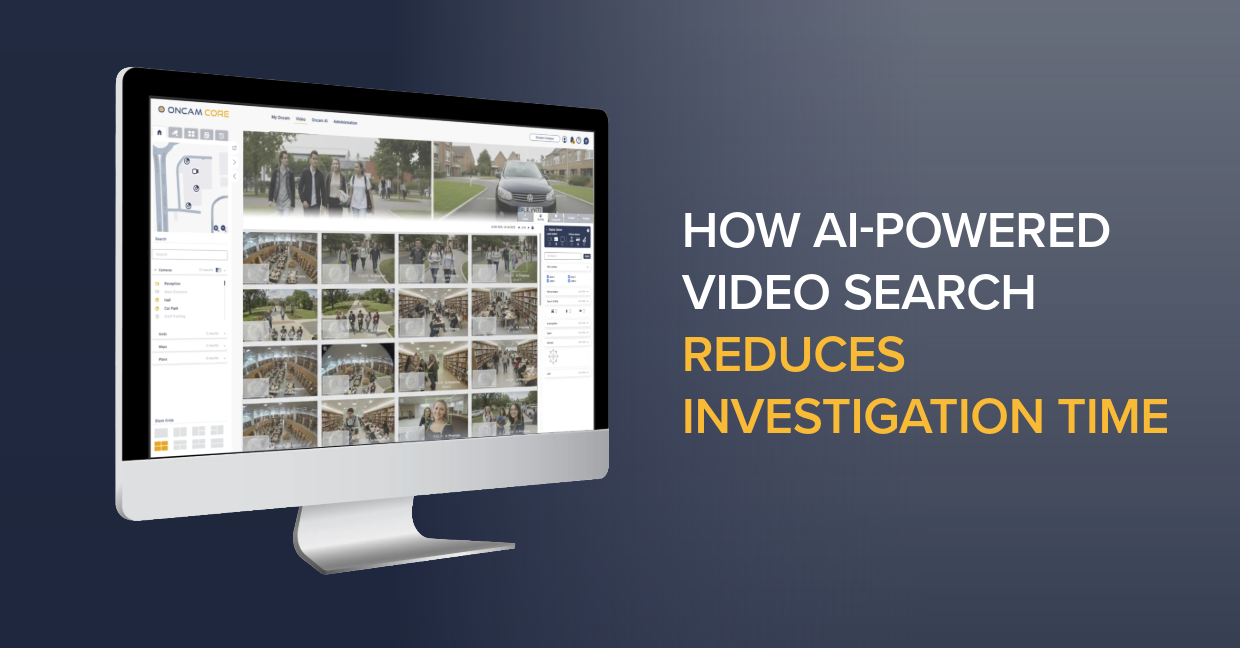
When a security incident occurs, finding the right footage can be one of the most time-consuming parts of the investigation. Security teams often need to review recordings from multiple cameras, [...]
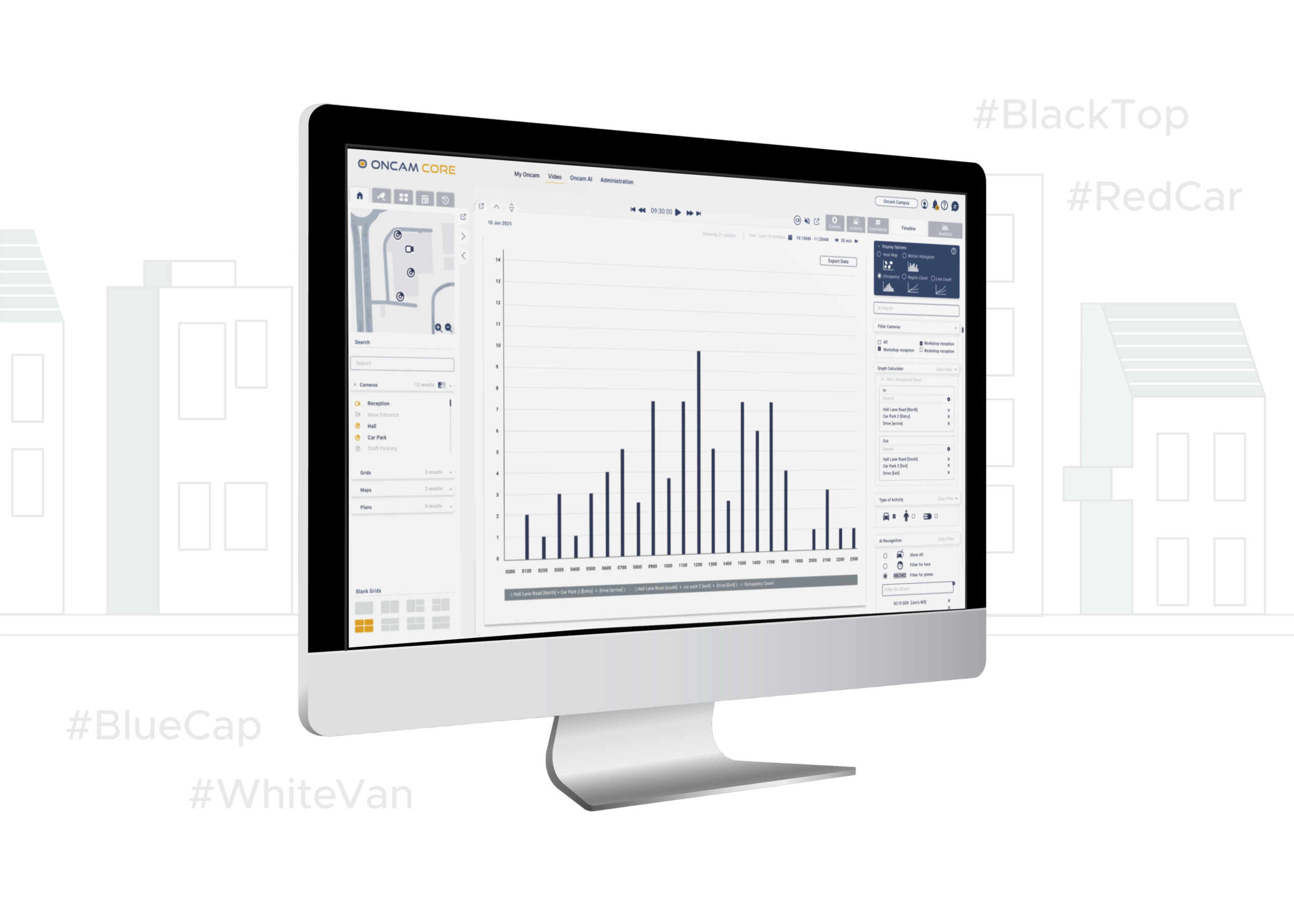
For years, video surveillance systems were primarily used as forensic tools. When an incident occurred, security teams would review footage to understand what happened and support investigations. While this remains [...]

For years, network video recorders (NVRs) have been the backbone of video surveillance systems. They provided a reliable, centralized way to store and manage footage, well suited to environments where [...]
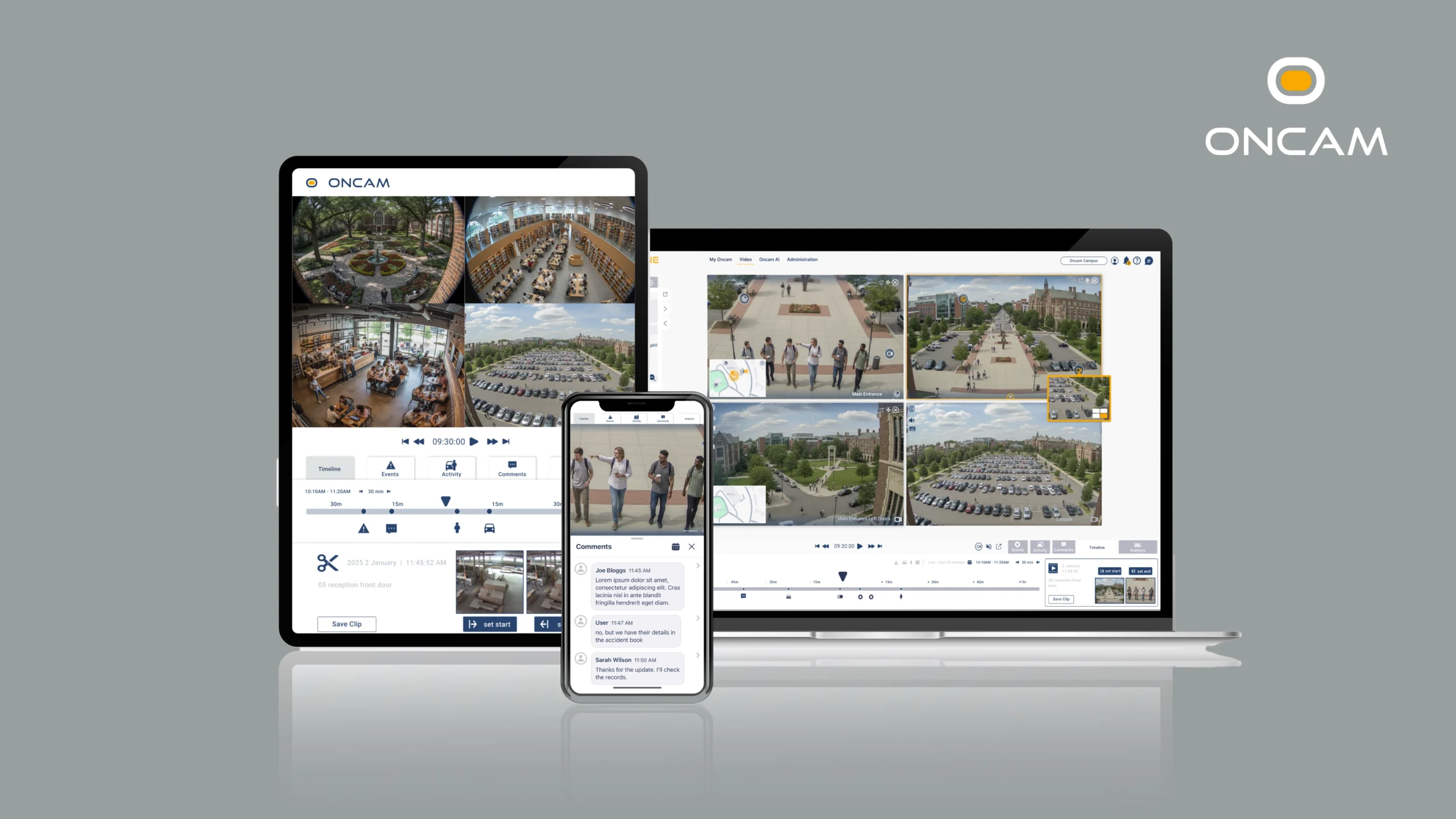
Mobile access has shifted from a convenience to a core operational requirement in video surveillance—but many platforms still treat it as an add-on rather than a primary interface. As security [...]
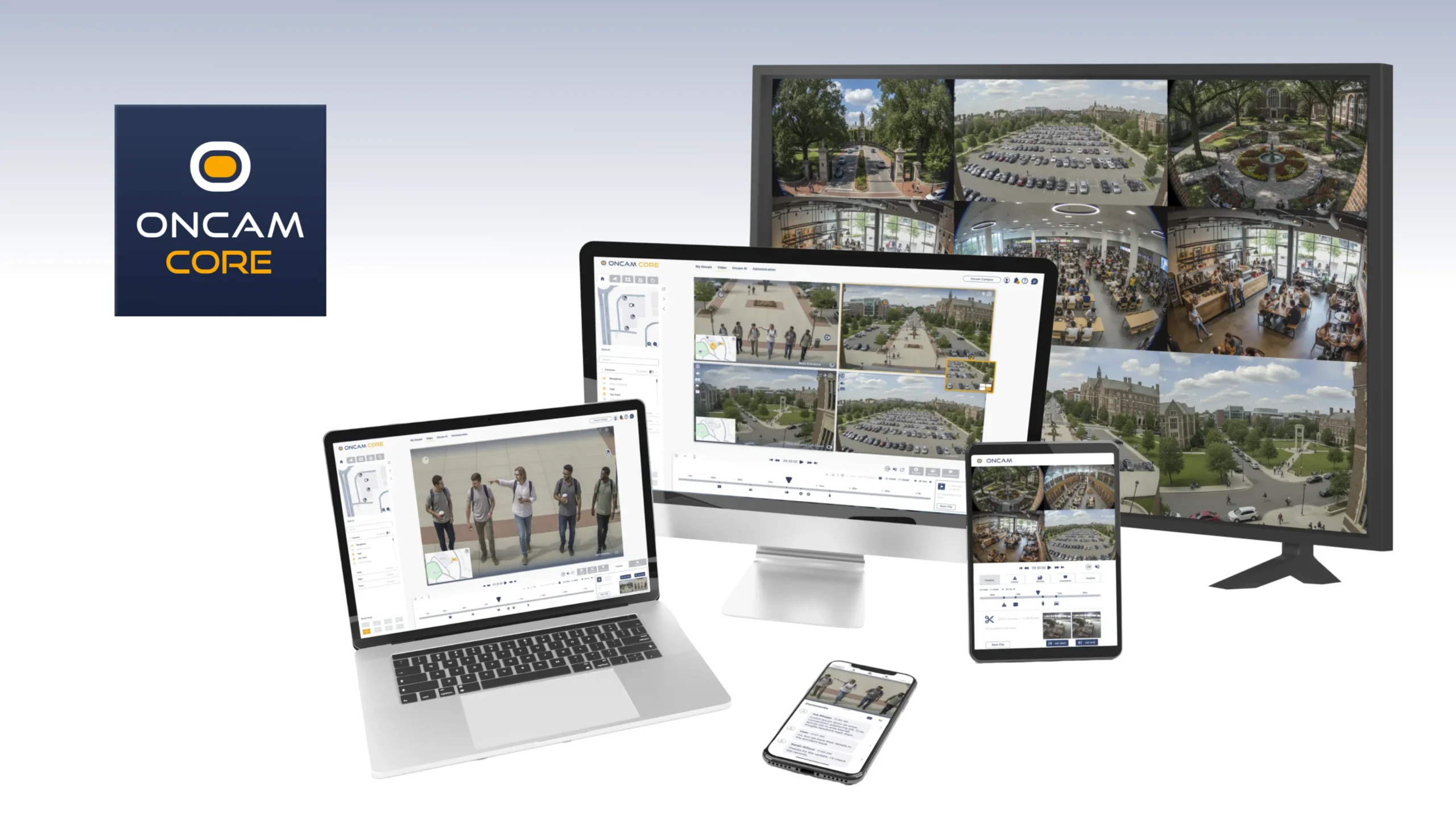
At its simplest, Oncam Core is a cloud-connected video management platform. In practice, it’s a fundamentally different way of accessing, understanding, and acting on video across modern, distributed environments. [...]